How Are Stairlifts Installed?
 By the UK Mobility Stairlifts Editorial Team · How we research
Published Invalid Date · 2 min read
Having a stairlift fitted is far simpler than many people expect. There's no building work, no planning permission, and in most cases it's done in a single visit.
Quick answer: A stairlift is installed by fixing its rail to the stair treads (not the wall). After a survey, the lift is supplied and fitted, a straight lift often in a few hours, a curved one after its made-to-measure rail is manufactured. It charges from an ordinary plug socket and needs no building work.
The installation process, step by step
- Assessment, Acorn assesses your staircase, measures up, and confirms the right model and price.
- Manufacture (curved lifts only), for a curved stairlift, the rail is made to measure for your stairs, which takes a short lead time.
- Fitting, the rail is fixed to the stair treads and the lift is installed, tested and demonstrated so you're confident using it.
How the rail attaches
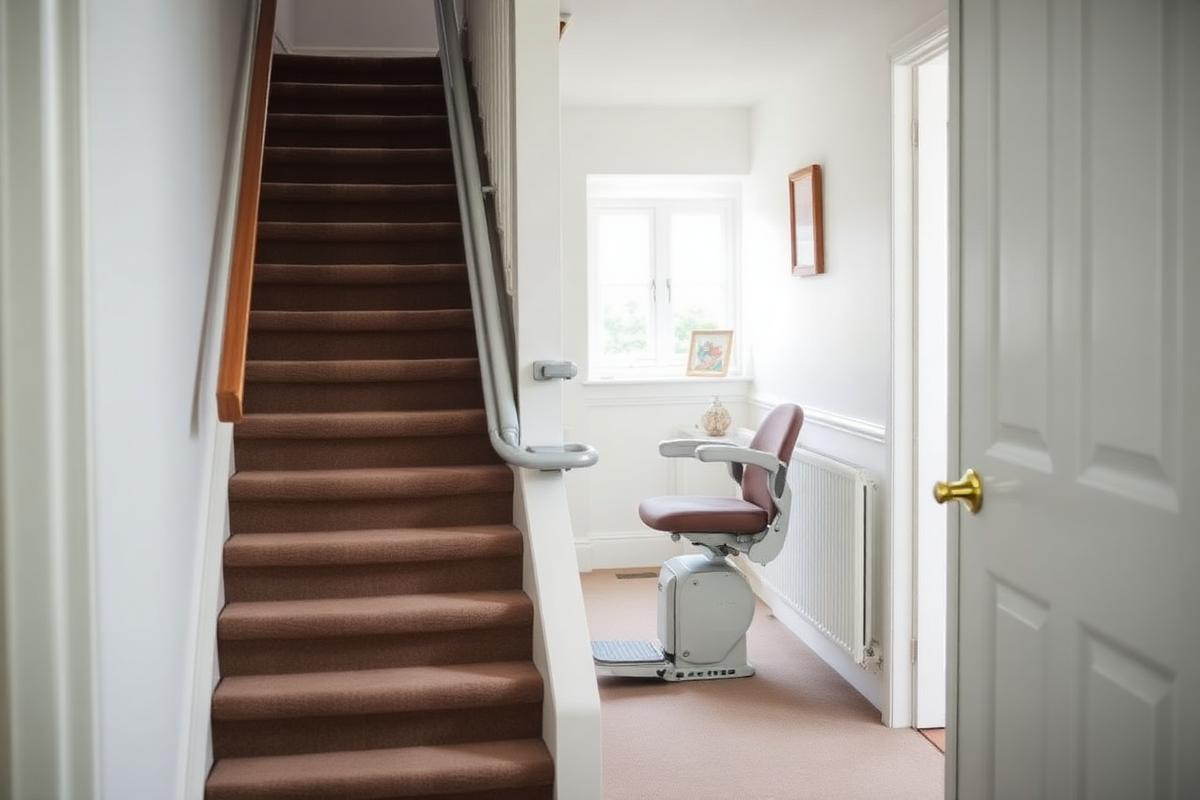
The rail bolts to the stair treads themselves, not the wall, so it works in almost any home and leaves your walls and décor untouched. This is also why a stairlift can be removed later with only minor, easily repaired marks.
Ready to compare your options?
Answer a few quick questions and we will match you with a suitable stairlift quote.
Do you need building work or planning permission?
No. A stairlift isn't a structural alteration, so for your own home there's normally no planning permission and no building work involved. In a rented or council home, you'll usually need the landlord's permission first.
Power supply
A stairlift runs on rechargeable batteries that top up from a standard domestic plug socket, so there's no major electrical work. The installer positions the charging points conveniently.
To find out exactly what's involved for your staircase, fill in the form below for a free, no-obligation quote from Acorn Stairlifts.
Where to go next: stairlift costs · straight stairlifts · curved stairlifts · get a free quote
Frequently asked questions
About UK Mobility Stairlifts
We compare UK stairlift brands, prices and funding using published specifications, dated price data and official guidance. Every figure on this page links back to how we checked it.
Editorial policyRelated guides
Sources & further reading
- Help with home adaptations and repairs , Citizens Advice
- Home adaptations and equipment for social care , NHS
- Electrical safety in the home , Health and Safety Executive