Preventing Falls on the Stairs
 By the UK Mobility Stairlifts Editorial Team · How we research
Published Invalid Date · 2 min read
Stairs are one of the most common places for falls in the home, particularly for older people. A few practical changes can reduce the risk considerably.
Quick answer: To help prevent falls on the stairs, fit secure handrails (ideally on both sides), improve the lighting, keep the steps clear, add non-slip surfaces, and wear well-fitting footwear. Where the stairs are a genuine struggle, a stairlift removes the risk of a stair fall altogether.
This guide provides general information, not medical advice. If you or a relative are experiencing falls, dizziness or unsteadiness, please speak to a GP.
Why stairs are a risk
Reduced strength, balance or eyesight can all make stairs harder to manage safely, and a fall on the stairs can have serious consequences. The good news is that most of the risk factors can be reduced.
Practical steps to make stairs safer
- Handrails, a secure handrail on both sides gives support going up and down.
- Lighting, bright, even lighting with switches at the top and bottom; night lights can help.
- Keep steps clear, no clutter, trailing items or loose rugs at the top or bottom.
- Non-slip surfaces, well-fitted carpet or non-slip nosings on the edges.
- Footwear, supportive, well-fitting shoes or slippers rather than loose ones.
- Eyesight, regular eye checks, as poor depth perception makes stairs harder.
Ready to compare your options?
Answer a few quick questions and we will match you with a suitable stairlift quote.
When to consider a stairlift
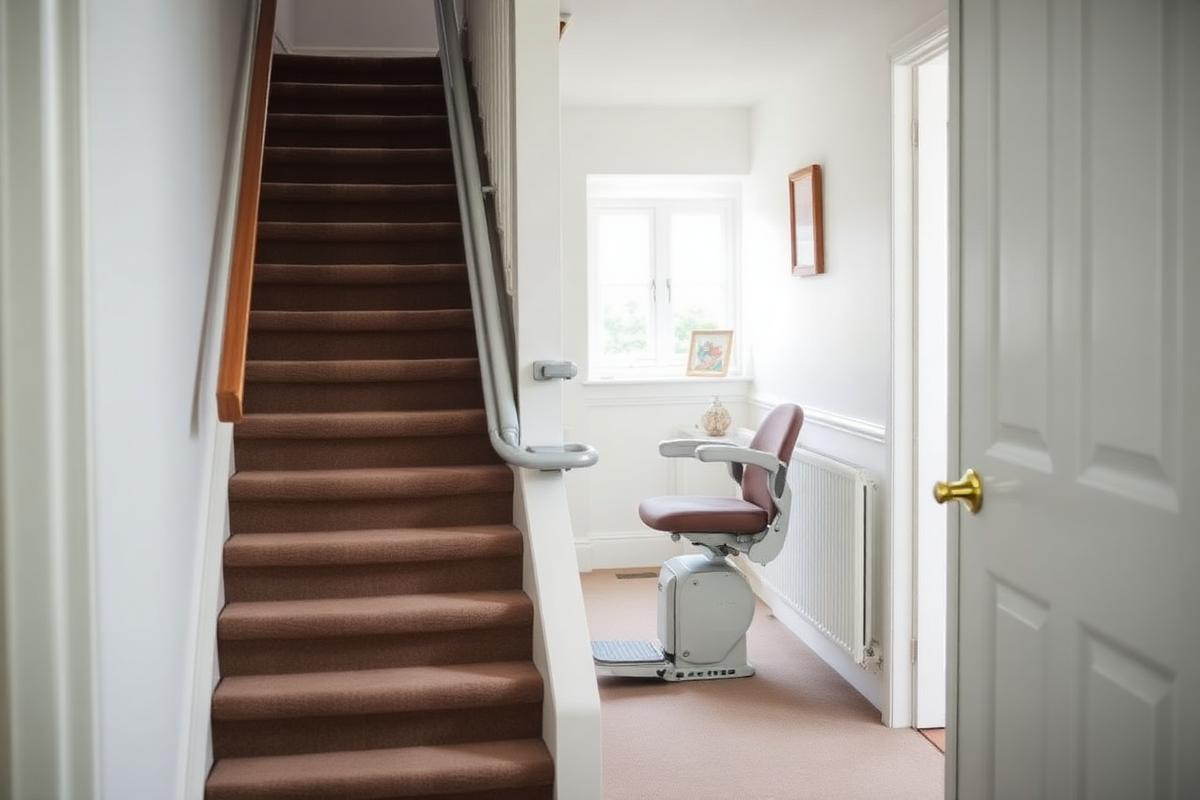
If someone is finding the stairs genuinely difficult, pausing, struggling, or avoiding going upstairs, a stairlift removes the need to climb them at all, which is the most effective way to remove the risk of a stair fall. It can also restore confidence and access to the whole home.
When to seek professional advice
If falls, dizziness or unsteadiness are happening, speak to a GP, who can investigate the causes. An occupational therapist can also assess the home and recommend changes.
To find out about a stairlift for your home, fill in the form below for a free, no-obligation quote.
Where to go next: types of stairlift · stairlift costs · funding and grants · get a free quote
Frequently asked questions
About UK Mobility Stairlifts
We compare UK stairlift brands, prices and funding using published specifications, dated price data and official guidance. Every figure on this page links back to how we checked it.
Editorial policy