Stairlift Alternatives: What Else Can Help You Stay in Your Home?
 By the UK Mobility Stairlifts Editorial Team · How we research
Published Invalid Date · 6 min read
If climbing the stairs has become painful, unsafe or exhausting, a stairlift is usually the quickest and least disruptive fix, but it isn't the only one. This guide compares the main alternatives so you can decide what suits your home, your mobility and your budget.
UK Mobility Stairlifts is an affiliate of Acorn Stairlifts. If you decide a stairlift is right for you, we'll pass your details to Acorn for a free, no-obligation quote. If a different option is better, this guide will help you work that out too.
At-a-glance comparison
| Option | Typical UK cost (2026) | Best for | Disruption |
|---|---|---|---|
| Straight stairlift | £2,000–£3,500 | Standard straight staircases | Very low, fitted in a few hours |
| Curved stairlift | £4,000–£6,000+ | Staircases with bends, landings or spirals | Low, usually 1 day |
| Reconditioned stairlift | £1,200–£2,500 | Budget-conscious buyers on straight stairs | Very low |
| Stairlift rental | £30–£90 / month | Short-term needs (recovery, end-of-life care) | Very low |
| Through-floor home lift | £18,000–£30,000+ | Wheelchair users, long-term mobility loss | High, needs building work |
| Platform / wheelchair lift | £8,000–£20,000+ | Short vertical rises, wheelchair users | Medium–high |
| Step lift | £2,500–£5,000 | 1–4 steps at an entrance or split level | Low–medium |
| Ground-floor living | £5,000–£40,000+ | Homes where a downstairs bed/bath is possible | High, building work |
| Move to a bungalow | Cost of moving | People happy to relocate | Very high |
Prices are general UK market guidance for 2026 and vary by supplier, home and specification. For a stairlift, get a free Acorn quote to see your actual price.
1. Stairlifts (straight, curved, outdoor)
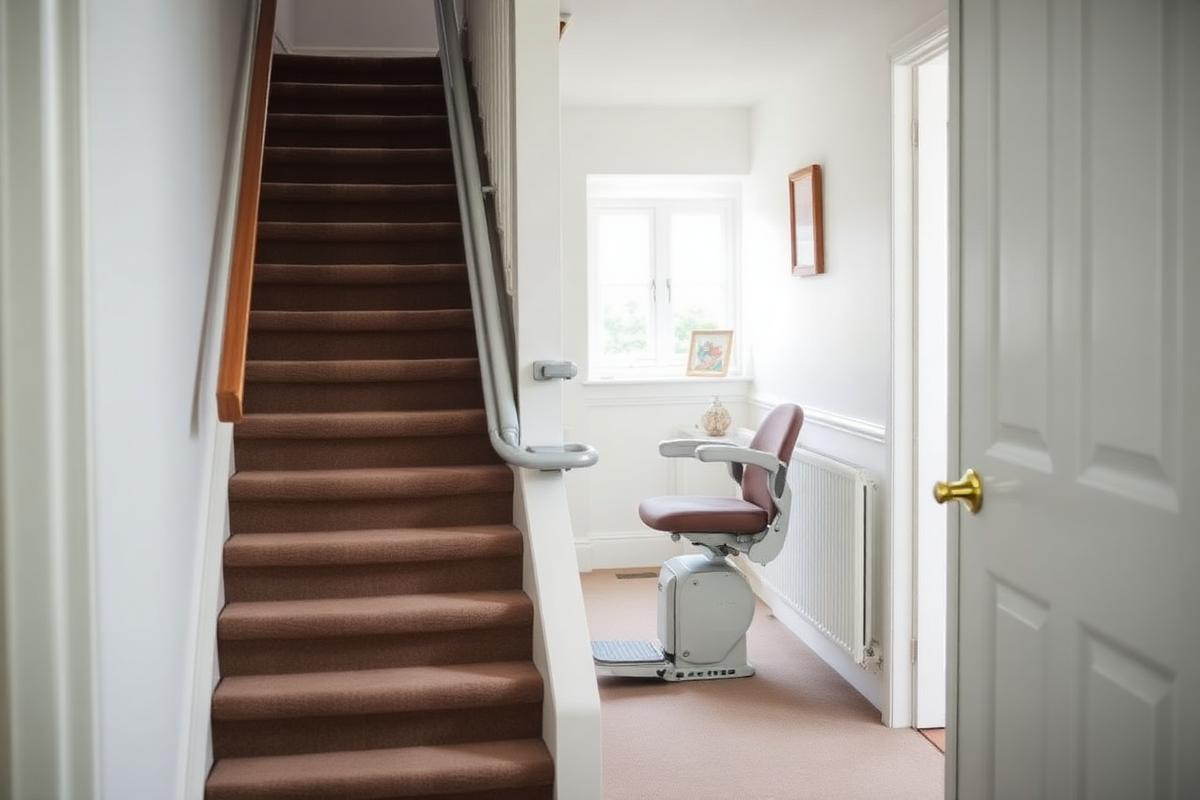
For most people worried about the stairs, a stairlift is the fastest, cheapest and least invasive option. A straight stairlift can often be fitted the same week, a curved model within a few weeks, and neither requires building work, the rail attaches to the treads, not the wall.
Consider a stairlift when:
- You can transfer safely onto a seat.
- You want to stay in your current home with minimal disruption.
- Your budget is under £6,000.
Look at other options when:
- You need to travel between floors seated in a wheelchair.
- Your staircase is too narrow even for a slimline model (rare, Acorn will confirm at survey).
Learn more in our stairlift types guide or costs guide.
Ready to compare your options?
Answer a few quick questions and we will match you with a suitable stairlift quote.
2. Through-floor home lifts
A through-floor lift is a small domestic elevator that travels through a hole cut in the ceiling, usually between a living room and the bedroom above. Modern units are quiet, self-contained and plug into a standard socket.
- Cost: £18,000–£30,000+ installed.
- Pros: Suits wheelchair users; no need to transfer; frees the staircase.
- Cons: Expensive; needs building work and structural approval; takes floor space on both levels.
Best for people with significant, long-term mobility loss where a stairlift genuinely won't work. For most walking users, a stairlift delivers the same benefit at a fraction of the cost.
3. Platform (wheelchair) lifts
A platform lift moves a wheelchair vertically, either outdoors between garden levels or indoors over a short rise. Enclosed indoor versions can serve two floors.
- Cost: £8,000–£20,000+.
- Pros: Wheelchair-friendly; useful for split-level homes.
- Cons: Takes significant space; often needs planning permission outdoors.
4. Step lifts
A step lift handles 1–4 steps, typically a front door threshold or a small level change inside the home.
- Cost: £2,500–£5,000.
- Pros: Solves a specific access problem cheaply.
- Cons: Only helps with that one step change, not a full staircase.
5. Moving to ground-floor living
Converting a downstairs room into a bedroom and adding a wet room or accessible shower can remove the need to use the stairs at all.
- Cost: £5,000–£40,000+ depending on scope.
- Pros: Permanent; adds value if done well; may be part-funded by a Disabled Facilities Grant.
- Cons: Significant building work; loses a reception room; not possible in every layout.
6. Moving to a bungalow or accessible home
If your current home simply doesn't suit your needs long-term, moving to a bungalow or a modern accessible flat removes the problem entirely.
- Cost: Estate agent fees, stamp duty, removals, often £10,000+.
- Pros: Fresh start; no adaptations needed.
- Cons: Emotionally difficult; you leave neighbours, memories and familiar routines.
7. Grab rails, second bannisters and non-slip treads
If the stairs are only slightly harder than they used to be, small changes can buy you time:
- Fit a second bannister so you have a rail on both sides.
- Add non-slip stair treads and improve lighting at the top and bottom.
- Book a free Occupational Therapist assessment through your GP or council.
These aren't alternatives to a stairlift if the stairs are genuinely unsafe, but they help if you're not there yet. See our guide on preventing falls on the stairs.
How to choose
Work through these questions in order:
- Can I transfer onto a seat safely? If yes, a stairlift is almost always the best-value answer.
- Do I need to travel between floors in a wheelchair? If yes, look at a through-floor or platform lift.
- Is the problem one step or a whole flight? One step → step lift. A flight → stairlift or home lift.
- Could I live entirely on one floor? If yes and the layout allows, ground-floor living may suit long-term.
- Am I happy in this home? If not, moving to a bungalow may be simpler than any adaptation.
Ready for a stairlift quote?
If a stairlift looks like the right fit, we'll pass your details to Acorn Stairlifts for a free, no-obligation quote, no phone number needed to start.
Where to go next: stairlift costs · types of stairlift · Acorn vs Stannah · get a free quote
Frequently asked questions
About UK Mobility Stairlifts
We compare UK stairlift brands, prices and funding using published specifications, dated price data and official guidance. Every figure on this page links back to how we checked it.
Editorial policy